The Surgeon’s Kit and Surgery in the Crimean War
Kirsty Chilton, FNM Volunteer
November 2026
There must be few subjects that inspire dread like the thought of surgery without anaesthesia, and one of the most interesting items in the Florence Nightingale Museum is a surgeon’s box, the instruments within reminding us of the things Nightingale’s Scutari patients had endured.
 The box, which would have been in use in the period of the Crimean War, and which is on loan from the Royal College of Surgeons, is by the London instrument makers Weiss and Sons. Many surgeons in earlier times were metal workers themselves, shaping the tools they wanted to use themselves (Henry V’s surgeon John Bradmore, for example, was supposedly a skilled metalworker). Later, many of these boxes were made by cutlers (makers of all manner of metal tools) until the early eighteenth century, when it is generally agreed that many firms began to specialise more exclusively and instruments begin to feature the maker’s name or mark.
The kits carried in civilian practice could be smaller, containing the instruments for a single operation, but military and naval surgeons needed to be ready to face more eventualities, so their kits were often larger, with a greater selection of instruments. The surgeon’s chest raised from the wreck of the Mary Rose is a good early example of one of these box kits, but the box displayed at the Florence Nightingale Museum is also a great example, with plenty to say about military surgery and operations in general in the nineteenth century.
Its contents give an excellent idea of what the surgeon carrying it would have been expected to do, with instruments for bullet extraction, trephination (head surgery) and a full amputation kit including artery forceps and bone nippers. There is also a fine set of straight bladed Liston knives, which are hidden under the saw in the display – originally, the saw would have fitted into the inner lid of the box. Not all the other instruments in the box can seen as the box has two levels. In the lower compartment, there was a tourniquet for controlling blood loss and the trephination kit – the Heys saw, a skull saw with double semicircular blades, is in the top tray though, hinting at the Trephine’s presence.
What is missing is interesting too – the box contains no suggestion of anaesthetic use. Ether and chloroform were both in use in surgery during the Crimean War, but military surgeons didn’t always have it, or didn’t want to give it because the debate over its safety was still very active. John Hall, surgeon and the Inspector-General of Hospitals, based at Scutari where Nightingale worked, famously said of anaesthesia in a letter to the Times in 1854:
“I would rather hear my patient bawl lustily than see him sink silently into his grave”.
But his advice regarding anaesthesia to his surgeons actually only seriously advised against it in the case of serious gunshot wounds. Today, we would be shocked at the idea of a surgeon wanting to operate without anaesthesia, but then anaesthesia was still rather experimental and many conservative surgeons like Hall were unsure.
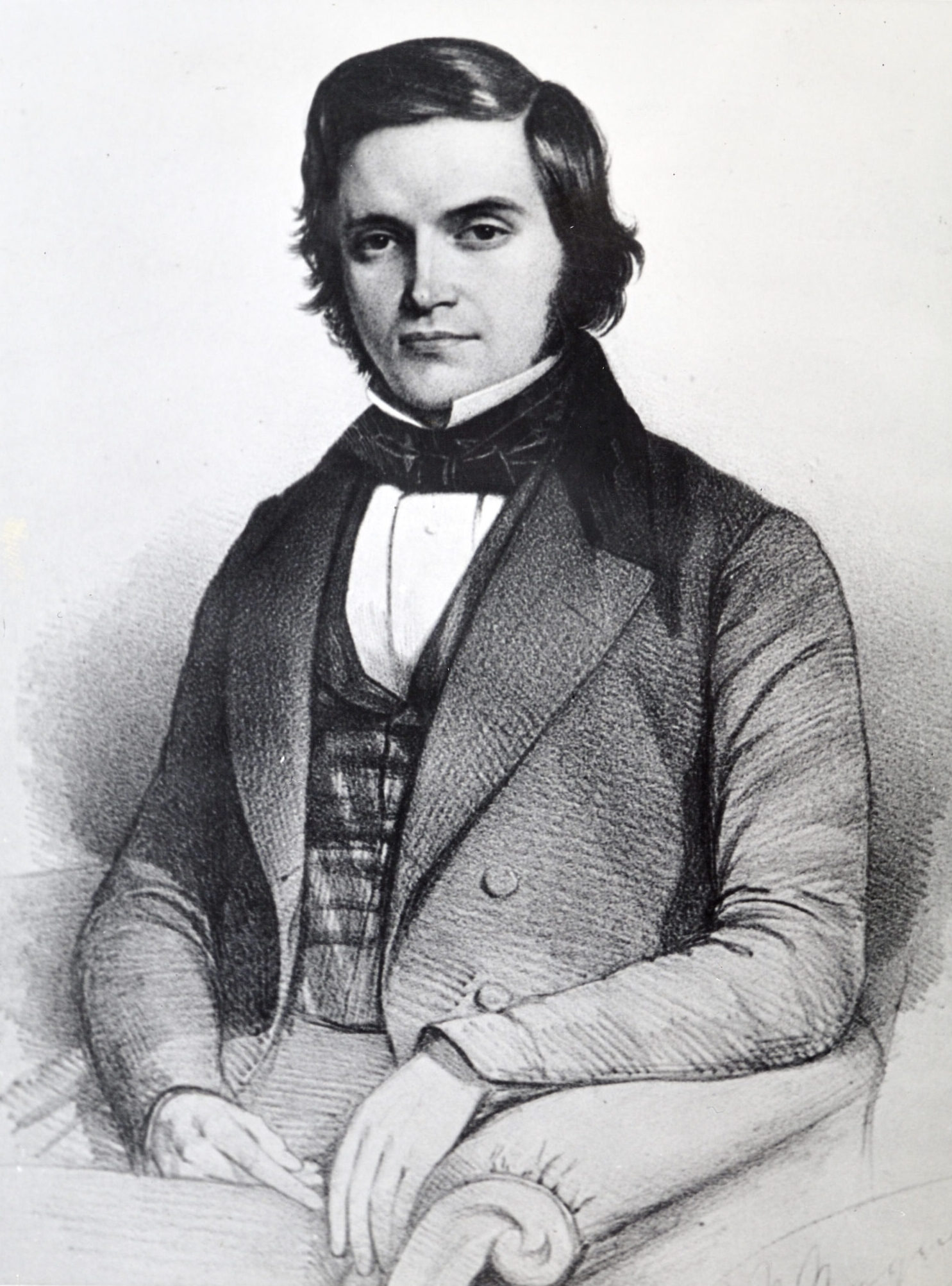
Sir William Bowman. FNM 0257.
Nightingale herself was keen to see operative areas improved, with greater privacy, and to see surgical patients given greater aftercare and she became personally involved in dressing the patients. In a letter she wrote from the Crimea to her surgeon friend William Bowman (whose name can be found on her Harley Street case notes in the hedge section of the museum), she noted of the number of surgical patients at time of writing:
“I think we have not an average of three Limbs per man”.
The young surgeons who went out to the Crimea carrying kits like the one on display found that they had a lot of tragic work to do. You can gaze at the knives in the box and imagine them in regular use. When I look, I see the design genius of John Weiss and the skill of his instrument makers and feel a technical fascination with the mechanics of the instruments and the surgical principles and techniques of the nineteenth century. But I also think of the soldiers and the reality of the operations that the box embodies.
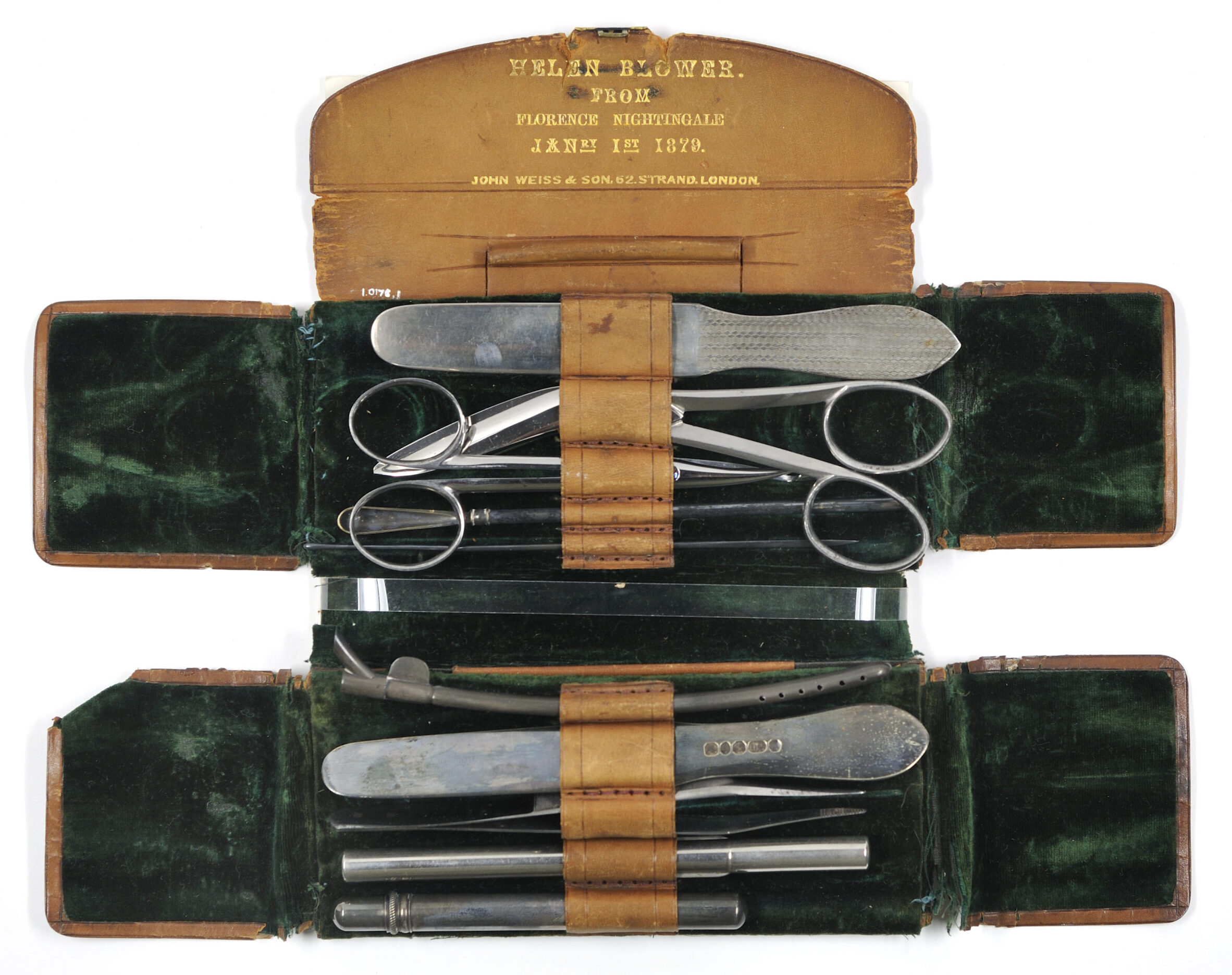
Medical Instrument Case gifted to Helen Blower by Florence Nightingale. This was also made by John Weiss & Son but later on, in the 1870s. FNM 0178.01.
Bibliography
George Guthrie , ‘On gun-shot wounds of the Extremities’, 1815
George Ballingall ‘Outlines of Military Surgery’, 1852
W H Weston-Davies, The Surgical Instrument Maker: an Historical Perspective, 1989
John Weiss, Catalogue of Surgical Instruments, 1825
Mike Hinton, Reporting the Crimean War: Misinformation and Misinterpretation, 2015
Biographies of Guthrie and John Hall can be found at Plarr’s Lives of the Fellows (Plarr’s Lives of the Fellows — Royal College of Surgeons)
Edward Tyas Cook, The Life of Florence Nightingale, vol. 1 of 2, 1913