
Charlotte Wilsdon
Swindon’s Nightingale Nurse
Research and Words by Frances Bevan of Radnor Street Cemetery
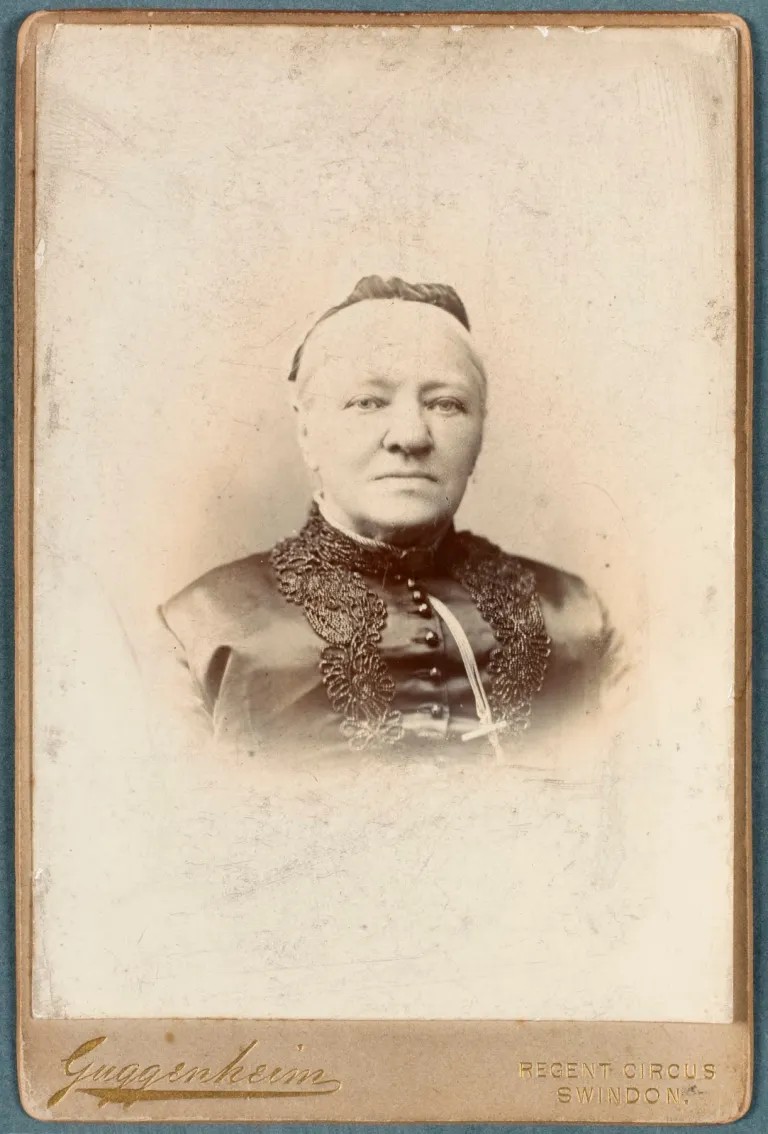
Charlotte Wilsdon was born in Abingdon in 1817, the daughter of Stephen Cox, a carpet weaver, and his wife Ann.
At the outbreak of the Crimea War in 1854 Charlotte was living in Oxford with her two young daughters. She had been married and widowed twice and was then working as a tailoress, taking in lodgers to make ends meet. In October of that year Charlotte responded to Florence Nightingale’s appeal for nursing volunteers. Charlotte was recommended by Dr Henry Wentworth Acland, and it is likely she gained her nursing experience during the cholera epidemic that had swept through Oxford earlier that year.
Charlotte was among a group of 38 women who with Florence Nightingale left London Bridge Station for Scutari early on October 23, 1854.
After more than a year of working in such dangerous and challenging conditions Florence Nightingale had to send the invalided Charlotte Wilsdon back to England in 1856.
In a letter to Lady Cranworth, a member of the management committee, dated June 7, 1856 she writes:
‘Charlotte Wilsdon, I regret to say, I was obliged to invalid home 23 May by the advice of the medical officers. She is a kind, active and useful nurse, a strictly sober woman. And, I consider, well entitled to the gratuity of the month’s wages, promised by the War Office, and which I venture to solicit you grant her. I have directed her to apply to you.’
In 1859 Charlotte married William Andrews. Widowed for the third time in 1869, Charlotte lived independently for many years until old age and infirmity caught up with her. Sometime during the early 1890s she moved to Swindon to live with her daughter Harriet.
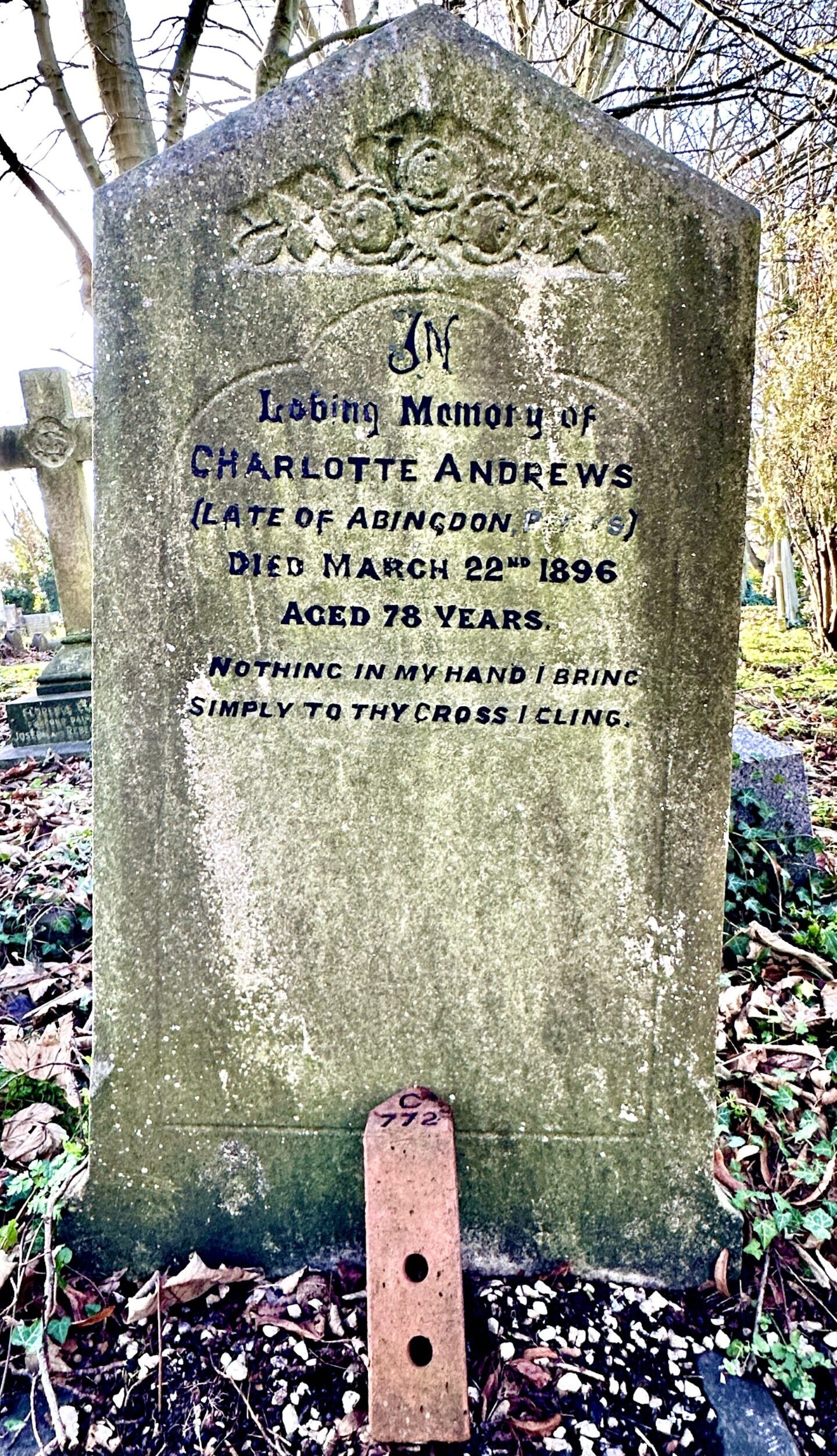
She died on March 22, 1896 at her daughter’s home, 3 Spring Gardens, Swindon. She was buried on March 27 in Radnor Street Cemetery, Swindon in plot C772.
Her story is regularly told during our frequent guided grave walks during the summer.
To discover more stories ‘Remembering the ordinary people of Swindon’ you can visit the Radnor Street Cemetery blog here.